Checking behind the surface
Moisture meters on the wall beside the shower, the cabinet base and the floor tell you whether the growth is only on the surface.
Bathrooms and kitchens are the two rooms designed to get wet, and in this climate they often never fully dry. Fort Lauderdale Mold Experts works out whether you have surface growth on tile and caulk or a wet wall behind it, then quotes the work that matches.
A shower in a house with the air conditioning set warm can stay damp for hours. Add a fan that vents into the attic instead of outside, or no fan at all, and the room never gets a chance to dry between uses.
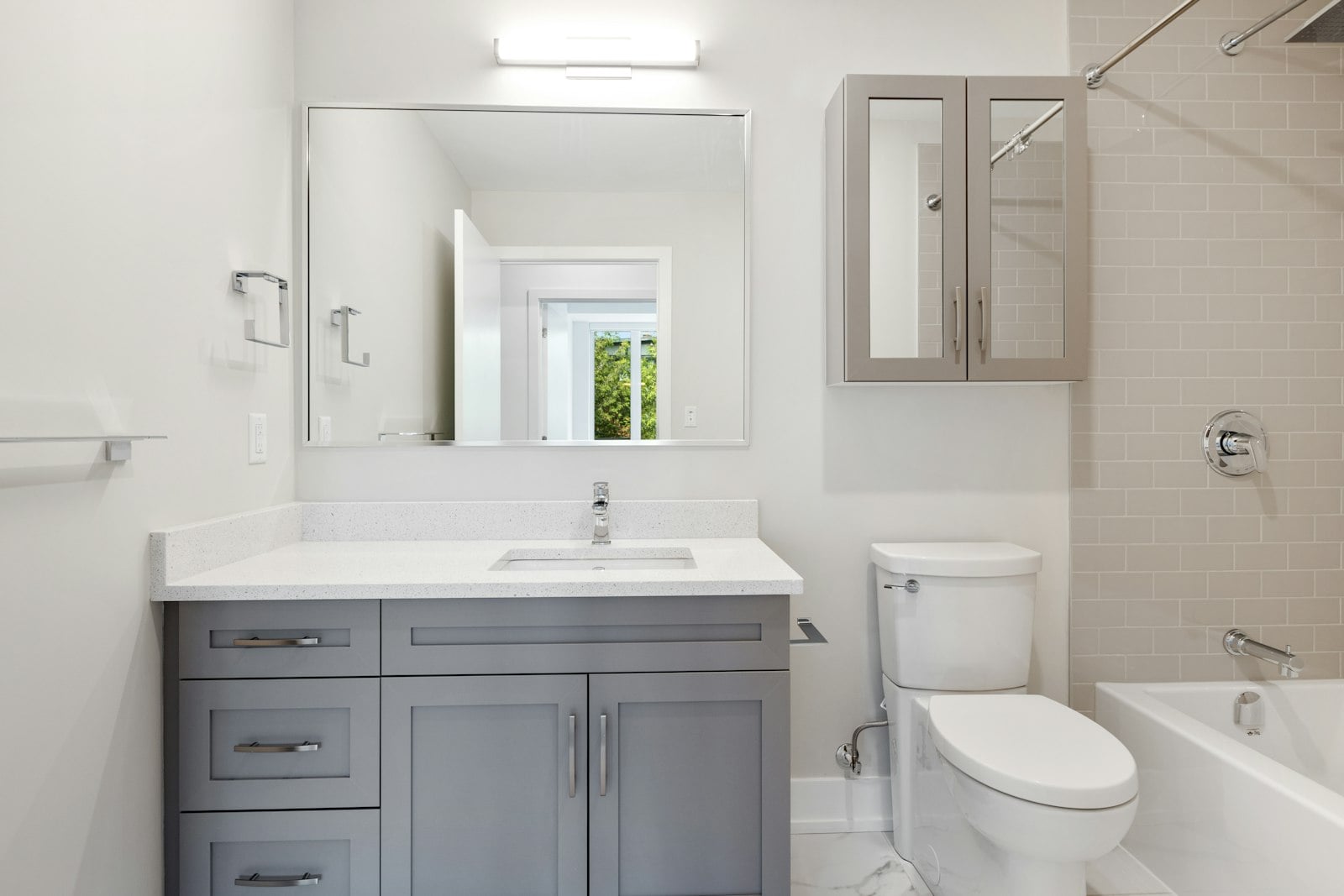
Some of this is a straightforward cleaning. Some of it is a wall that has to come out. The inspection decides which, and the quote says so plainly.
Moisture meters on the wall beside the shower, the cabinet base and the floor tell you whether the growth is only on the surface.
Tile, glass and sealed trim can often be cleaned. Failed caulk and grout are removed and redone so water stops getting behind them.
Soaked drywall, cabinet board and trim are cut back past the growth under containment, with the dust kept out of the rest of the home.
A proper exhaust fan that vents outside, a drip under the sink repaired, or a vanity gap sealed. Without that step the growth simply comes back.
The honest answer for a lot of bathrooms is that the tile is fine and the wall behind it is not. A cabinet base that has been wet for a year does not recover, and neither does the drywall behind a shower pan that leaks at the corner.
Compare removal and remediation to see where that line falls, and read the removal process if the wall has to come out.
If the growth started after a plumbing leak rather than everyday steam, see mold after water damage. To find out what is behind the tile before you commit to anything, start with a mold inspection.
Because the room never dries. In a humid climate a bathroom needs an exhaust fan that vents outside and runs well after the shower, otherwise the moisture just settles back on the walls. Failing caulk and grout let water behind the tile, where it stays.
A small amount on tile, glass or a sealed surface is a reasonable household job with gloves and ventilation. Growth on drywall, a ceiling or a cabinet base means the material underneath is wet, and that is not a wiping problem.
Whether the work is surface cleaning or removing and rebuilding part of a wall or vanity, plus access and containment. Fort Lauderdale Mold Experts sets the scope at the inspection and quotes it upfront.
The pattern is the same: a slow drip under a sink soaks the cabinet floor and the wall behind it, often for months before anyone notices. The cabinet base usually has to come out. Arrange an inspection if the cabinet floor feels soft.
Tell us what you are seeing and where, so the right inspection can be planned.