Signs of Hidden Mold at Home
Fort Lauderdale Mold Experts on the things people notice weeks before they see any growth, and what each of them usually turns out to mean in a humid Fort Lauderdale house.
- Upfront Quotes
- Inspection & Remediation
- Residential & Commercial
By the Fort Lauderdale Mold Experts team · Updated September 2026
Trust Your Nose First
Most people smell mold long before they see it. The classic description is earthy or musty, a little like a damp towel left in a bag, and it is strongest in a closed room or a closet. A useful test is to leave the house for a few hours and pay attention to the first breath when you walk back in, because you stop noticing a smell you live with.
Pay attention to when it appears. A smell that gets stronger when the air conditioning shuts off often points to something damp in a wall or a closet that the moving air was masking. A smell that arrives with the system starting up points more toward the air handler, the closet around it or the ducts.
Where the Water Usually Hides
In a slab-on-grade house with block walls, water travels sideways and low. It runs under baseboards, into the kickplate under kitchen cabinets and along the bottom of drywall, so the first affected material is often a few inches off the floor and completely out of sight behind trim.
The other reliable hiding places are overhead and inside closets. Air conditioning condensate lines clog and back up into the pan, which then overflows into the closet floor or the ceiling below. Roof leaks show up at the low point of a ceiling rather than where the water got in. A shower pan that seeps at one corner will soak the wall in the next room long before anything appears in the bathroom itself.
What the Stains Are Telling You
A brown ring on a ceiling means water sat there and then dried, and the ring marks the edge of how far it spread. If the middle of that ring is soft, the drywall is still holding moisture. Tide marks at the bottom of a wall tell you water rose from the floor rather than fell from above.
Bubbling paint, wallpaper lifting at a seam and baseboards pulling away from the wall all say the same thing: the material behind the finish has been wet. None of these prove there is mold, and all of them are reasons to get a meter on the wall.
Things That Are Not Mold
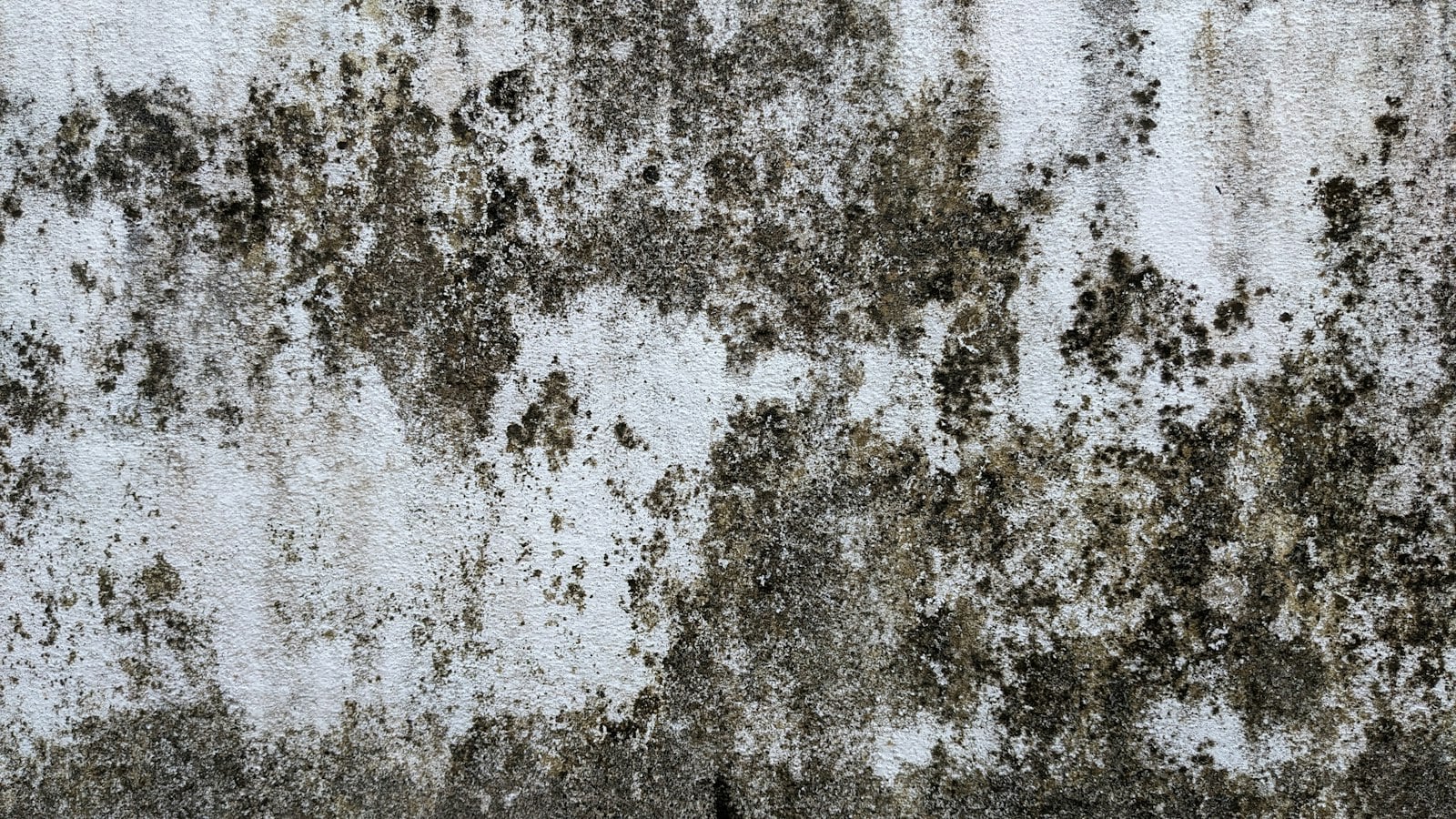
Not every dark mark needs a remediation quote. Soot from candles collects around vents and on ceilings in thin gray lines. Dust settles on the cold edges of air conditioning diffusers. Efflorescence, the white powdery deposit that appears on block and concrete, is mineral salt left behind by evaporating water, not growth, though it does tell you moisture is moving through the wall.
Old water stains that are bone dry and have not changed in years are usually a record of a leak somebody already fixed. A meter reading settles that in about a minute, which is a better use of money than a lab sample.
What You Can Check Safely
Open the cabinet under every sink and put your hand on the cabinet floor. Look behind furniture on exterior walls, particularly on the shaded side of the house. Open closets that stay shut and smell the air. Look at the ceiling under any upstairs bathroom. Check around the air handler closet for a damp floor or a stained wall.
What not to do: do not cut into drywall to look, do not scrub a patch with bleach before someone has seen it, and do not point a fan at visible growth. Each of those makes the situation harder to assess and can spread spores through the rest of the house.
Hidden Mold in Fort Lauderdale Homes
The local factor is simply that nothing dries. Humidity stays high most of the year, so a wall that gets wet in a summer storm is still damp two weeks later unless something actively dries it. Older concrete block homes in the eastern neighborhoods hide it behind painted block and furring strips; newer houses to the west hide it in two-story wall cavities and attic ducts.
Homes that sit empty for part of the year are the other common case, which is why so many calls arrive in the fall. If your property is out west, the notes on mold remediation in Pembroke Pines cover the closed-up-house pattern in more detail.
Arrange an Inspection
If two or three of the signs above describe your house, the next step is measurement rather than guesswork. A mold inspection puts meters on the material and traces the likely source, and the findings tell you whether you are looking at a cleaning job or a removal job. Compare removal and remediation so you know what you are being quoted for, or check service request availability with Fort Lauderdale Mold Experts.